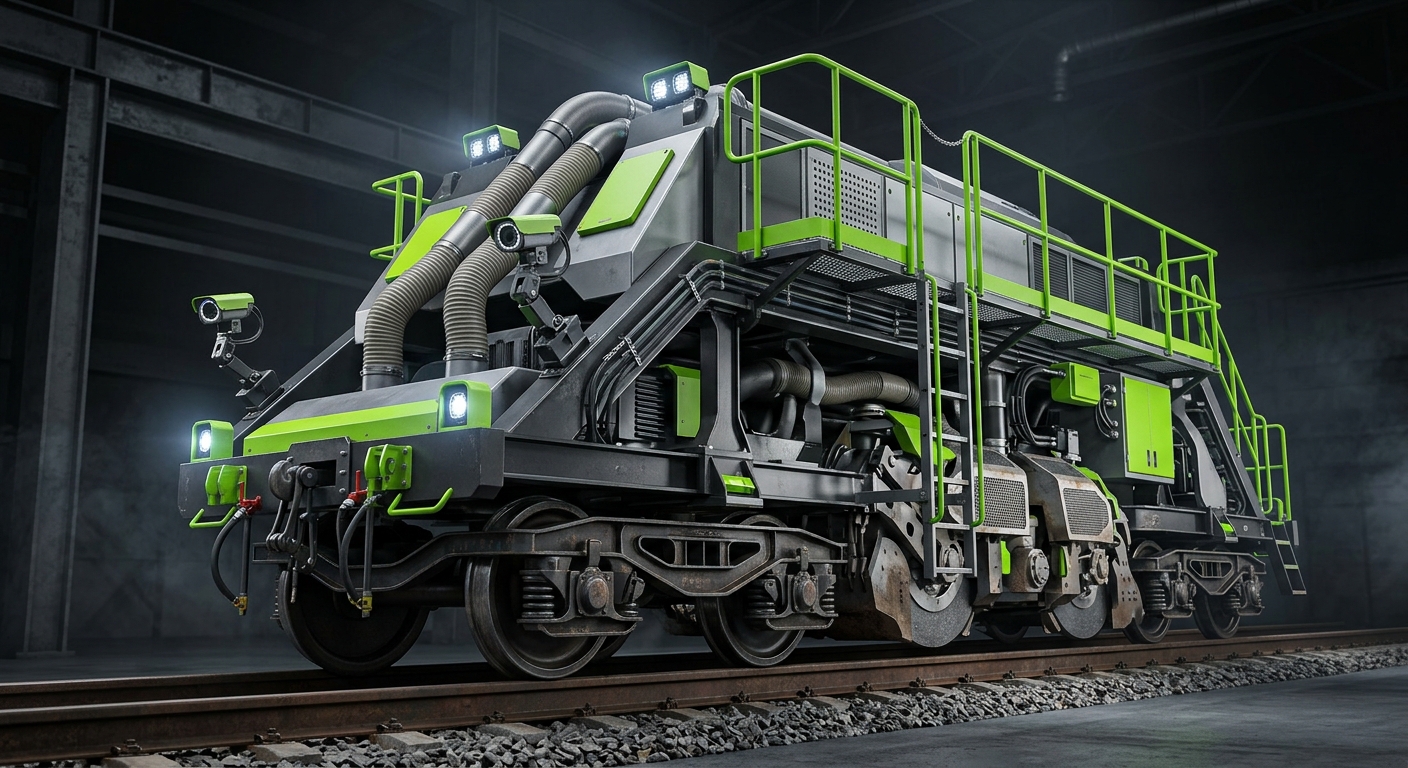
Disciplined engineering, from concept to component.
Our machines are engineering concepts, not fantasy vehicles. Each subsystem is purposeful, each component contributes to function, and everything is conceived to be built and serviced.
Multi-disciplinary by design.
Railway machinery sits at the intersection of heavy engineering, robotics and software. We build capability across the full stack.
Mechanical Design
Heavy structures, bogies, chassis and hydraulic systems engineered for load and duty cycle.
Robotics & Manipulation
Robotic arms, manipulators and autonomous platforms for precise field operations.
Sensing & Perception
LiDAR, machine vision, ultrasonic and thermal sensing integrated into every machine.
Controls & Autonomy
Real-time control systems, obstacle detection and progressive levels of autonomy.
Simulation & Digital Engineering
Model-based design, FEA and digital-twin validation before metal is cut.
Systems Integration
Bringing mechanical, electrical, software and data systems into coherent products.
Nothing decorative. Everything engineered.
Every concept machine adheres to a strict engineering checklist — the same discipline that separates a manufacturable product from a rendering.
- Correct railway wheelsets & gauge compatibility
- Logical bogie arrangement
- Operator cabin with full visibility
- Maintenance access & service panels
- Hydraulic systems & tool interfaces
- Battery / hybrid power provisions
- Sensor locations & lighting
- Walkways, handrails & access ladders
- Safety markings & emergency exits
- Lifting points & coupling interfaces
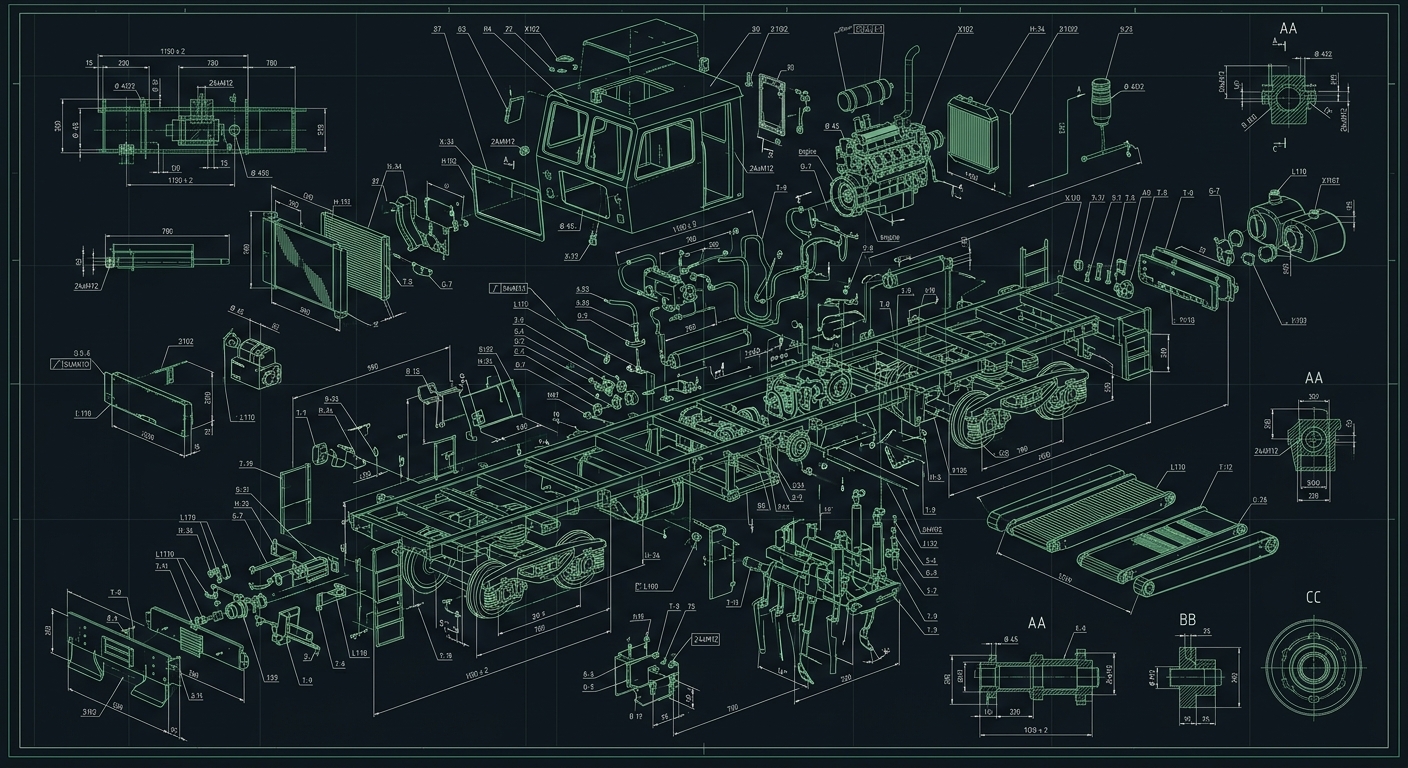
Engineered to global standards.
We design to the demanding realities of railway operation — safety, reliability, maintainability and interoperability. Our engineering targets alignment with the expectations of railway authorities, inspection regimes and international best practice.
Validation is model-based first: simulation, analysis and digital-twin testing de-risk each platform long before physical prototyping.
Digital engineering & AI platform